Summary
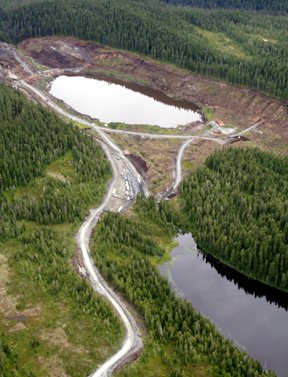
The Kensington Gold Mine, a mid-sized underground mining project in southeast Alaska began production during the summer of 2010. The mining prospect had been under study for many years, but fluctuations in gold prices and litigation questioning the disposal of mining waste in a lake slowed down development. Concerns about the perpetual risk of acid mine drainage and the effects on nearby Berners Bay remain.
Mine information
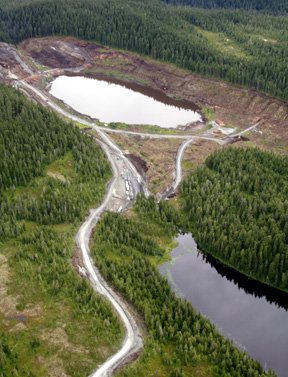
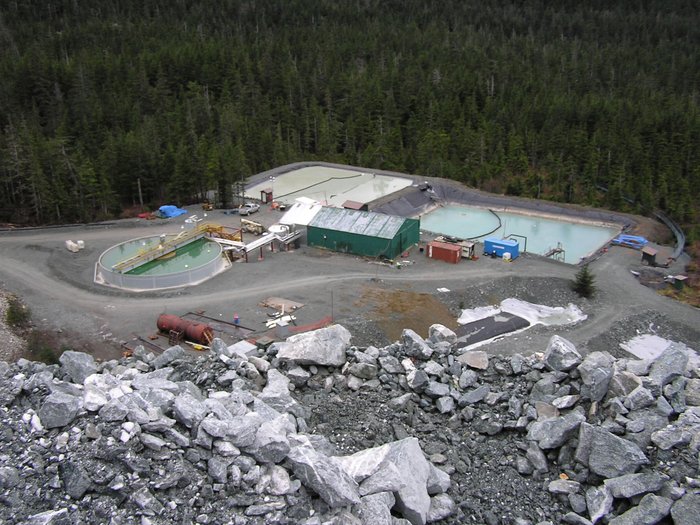
The Kensington Gold Mine began operations on June 24th, 2010, is expected to last for around 10 years, and to produce over 1 million ounces of gold in total. The mine site is about 45 miles north of Juneau in the Tongass National Forest. Coeur Alaska Inc., a wholly-owned subsidiary of the Idaho-based Coeur d’Alene Mines Corporation, will operate the mine. It can employ up to 200 workers, paying about $16 million per year in wages and benefits, as well as generating local and state tax revenue. Power is provided by on-site diesel generation with annual fuel consumption expected to be around 3 million gallons at full production. The ore concentrate is trucked off-site for further processing.
Environmental Concerns
Kensington Mine disposes of their mine tailings in a nearby lake. Initially, environmental groups attempted to convince Coeur to use a “dry” tailings method instead, which would present less risk to the watershed in the event of an earthquake and wouldn’t destroy a productive lake. Precedent was also been a major concern if regulatory agencies allowed Coeur to wipe out a natural lake.
The company and State of Alaska have long argued that the waste is actually inert (classified as “fill”) and not capable of producing problematic acid mine drainage. However, in 2008, acid mine drainage was found near the proposed tailings facility, and Coeur was issued a violation for exceeding permissible levels of manganese, zinc, aluminum and cadmium in the water. In late 2010, the company agreed to pay $170,000 for pollution violations related to this, and other construction problems at the mine.
Acid Mine Drainage
_
…Acid mine drainage is a major problem with many hardrock mines, including almost all mines where the metal ore is bound up with sulfur (metal sulfide mines)…
…In particular, 90% of the studied mines that originally predicted “low acid mine” drainage potential had acid mine drainage problems at the time of the study…
…an additional problem can also be created when the acid reacts with rock that neutralizes it…
_
Legal challenges in defense of the Clean Water Act went all the way to the US Supreme Court, which ultimately supported the mine plan in a split decision. Therefore, Lower Slate Lake was enlarged and used to contain all the mine tailings waste, which will kill everything in the lake. Mine supporters suggest that the lake can be reclaimed after mine closure, whereas mine opponents worry that there is a perpetual risk of acid mine drainage that will adversely affect the Berners Bay watershed.
Kensington does not use cyanide for purification of their gold.
Latest News
In February 2010, Coeur Alaska announced that it had found a nearby vein of gold that could significantly increase the resource base of the mine. In June 2010, Coeur signed a contract with China National Gold to process the concentrates from the Kensington mine and the mine began operations. In September Coeur also signed a contract with the German-based Aurubis AG to process the remaining ore concentrates from the mine.
Further Reading
- > Alaska DNR page on Kensington Mine (contains all permit and documents related to the mine)
- > Coeur Alaska page on Kensington Mine
- > Coeur d’Alene Mines Corporation website
- > Sierra Club information on opposition to the mine
- > Southeast Alaska Conservation Council (SEACC) page on Kensington Mine
Created: Jan. 19, 2018