Summary
Acid mine drainage (AMD) refers to the outflow of acidic water from a mining site. In most cases, this acid comes primarily from oxidation of iron sulfide (FeS2, also known as pyrite or “fool’s gold”), which is often found in conjunction with valuable metals. Acid mine drainage is a major problem with many hardrock mines, including almost all mines where the metal ore is bound up with sulfur (metal sulfide mines). A significant number of coal mines also suffer from acid mine drainage.
The metals dissolved by the acid drainage poison downstream waters, in many cases to the point where nothing other than microbes can survive. Although mining is by far the largest cause of this type of acid leaching, the process can also occur during non-mining land disturbances such as construction, or even naturally in some environments, examples of the more general phenomena of “acid rock drainage” (ARD).
Acid mine drainage is a worldwide problem, leading to ecological destruction in watersheds and the contamination of human water sources by sulfuric acid and heavy metals, including arsenic, copper, and lead. Once acid-generating rock is crushed and exposed to oxygen and the surface environment, acid generation is very difficult to contain or stop, and can continue for tens or thousands of years until the available sulfide minerals are exhausted. Roman-era mines have been identified which are still producing acid mine drainage. It is the irreversibility of the process of turning relatively inert ore into tremendous volumes of hazardous waste, the very long hazard-life of the material, and the extreme difficulty of containment which make acid mine drainage such a serious and persistent issue.
Geology and chemistry
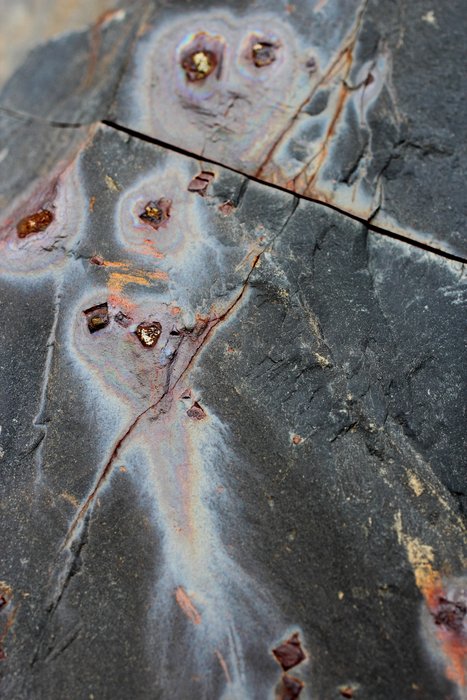
Copper, gold, lead, silver, zinc, and other desirable metals are often found in ores rich in iron sulfide. Ordinarily, these potentially toxic ores exist in huge quantities underground and are “locked away” from causing harm. They are isolated from the atmosphere and surface waters by their depth, providing relatively little surface area for them to react with water and oxygen. Acid formation in these buried deposits occurs at a slow and usually harmless rate. Extracting the valuable metals from these rocks, however, involves extracting and crushing the ore. This makes the ore more “chemically available” for acid-forming reactions.
When iron sulfide is exposed to air or dissolved oxygen in water, the sulfide oxidizes to sulfate, which then turns to sulfuric acid (H2SO4). Sulfuric acid is a highly corrosive chemical, used in many industrial processes as well as in car batteries. It is also one of the primary constituents in acid rain, and is toxic to most living organisms. The sulfuric acid produced in sulfide mine tailings makes the surrounding water more acidic, sometimes dramatically so. For instance, the Iron Mountain Mine in California contains water with a pH as low as -3.6, which is about 1000 times more acidic than battery acid. In addition to the direct effects of this acidity, acid water leaches toxic heavy metals such as lead and arsenic from the surrounding rocks into the water.
The mining process allows these acid and heavy metal generating reactions to occur at much higher rates than occur in nature. Metals mining produces waste rock and mine tailings with a surface area that is vastly greater than the undisturbed rock. Extracting valuable metals from ore usually involves crushing the ore rock into a mud slurry, where each particle can be less than 50 millionths of a meter across. This increases the surface area of the sulfide rock by a factor of 100,000 or more, which proportionally increases the rate of acid formation.
Theoretically, acid formation is neutralized where sulfide ores occur alongside more alkali minerals, since alkali (a.k.a. “basic”) is the opposite of acidic. Each alone is caustic, but combined they neutralize each other, like baking soda (a base) and vinegar (an acid). Carbonate rocks (limestone) are a typical alkali mineral sometimes associated with sulfides. Where acid and alkali minerals co-occur, the ratio of acid-generating material to neutralizing material is an important component of predicting whether a mine will have acid mine drainage. For example, metal at the historic Kennecott Copper Mine in Alaska was found in conjunction with large amounts of carbonate that neutralized any acid-forming compounds.
Acid mine drainage is often encouraged by a biological feedback loop. Once acid mine drainage starts, certain microbes thrive in the acidic environment. These microbes increase the production of sulfuric acid from the surrounding rock, further poisoning the downstream environment for other organisms. This feedback loop is an important component in all the most severe cases of acid mine drainage.
— Get Photo
Environmental Impacts
The increased acidity caused by acid mine drainage has a range of negative effects depending on the severity of the pH change. Many river systems and former mine sites are totally inhospitable to aquatic life, with the exception of “extremophile” bacteria. Additionally, heightened acidity reduces the ability of streams to buffer against further chemical changes.
Mining near the Iron Mountain Mine in California began in the 1860’s. In 1963 the mine closed, and in 1983 was designated an EPA Superfund site. Water passing through the mine site has resulted in periodic fish kills of migrating salmon since at least the 1940’s. The site requires expensive active maintenance in order to prevent it from also contaminating the drinking water of nearby communities. The high levels of acidity and toxic metals have sterilized large portions of nearby creeks. As with all acid mine drainage sites, the rocks will remain capable of generating sulfuric acid for an unknown number of years, perhaps throughout the entire future human habitation of the region. Some Roman mining sites in Great Britain are still producing problematic acid mine drainage, 2000 years after the completion of mining.
Acid mine drainage is not just a historical problem. A large number of active mines around the world (including in Alaska) are currently facing this problem. The scale of modern mining, and the thoroughness with which the ore is crushed, dwarfs that of ancient mines, raising concerns that our legacy of modern acid mine drainage will cause severe environmental and human harm for generations to come.
Acid drainage can occur even before mine construction is completed. For example, the recently completed Kensington Mine in Southeast Alaska did not expect to have acid mine drainage issues because of the presence of neutralizing rock in the ore. However, in 2007 acidic water was discovered near the construction site and was causing problems through at least 2010.
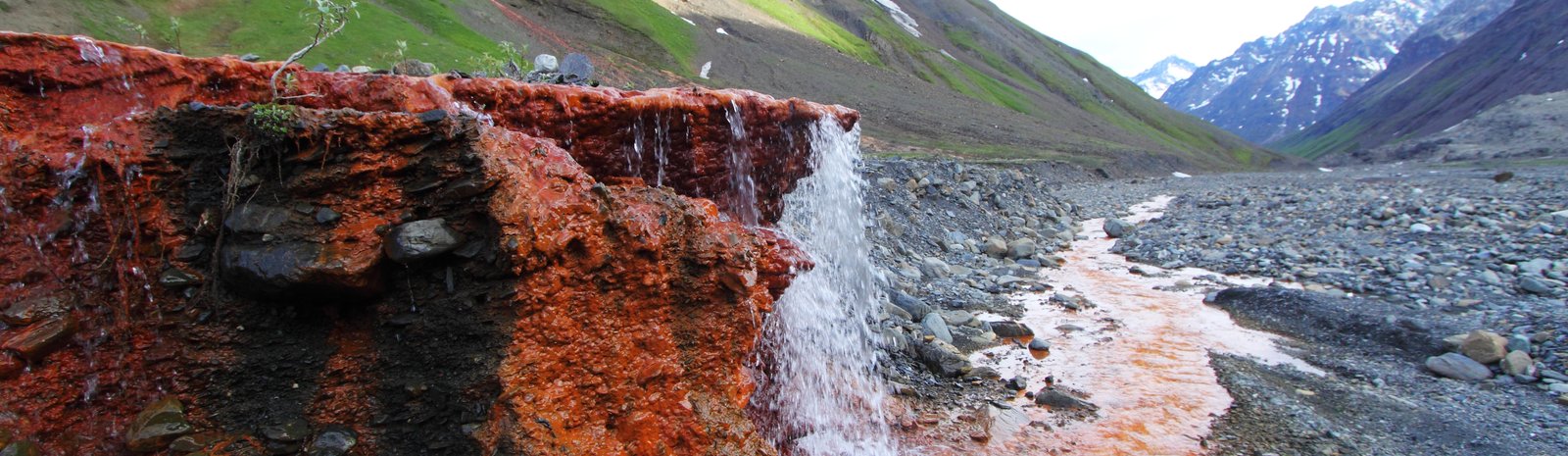
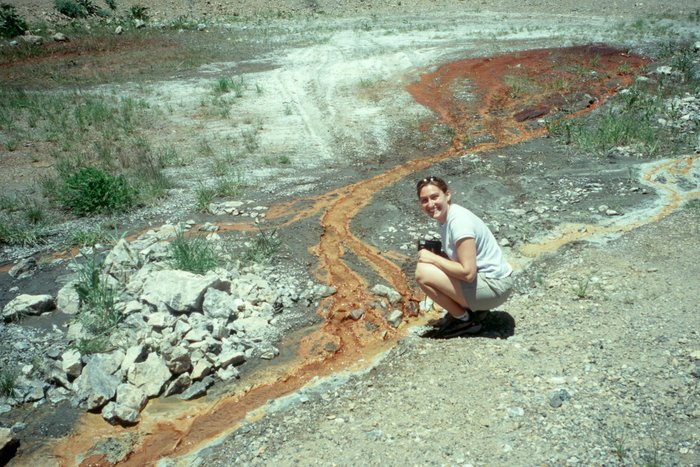
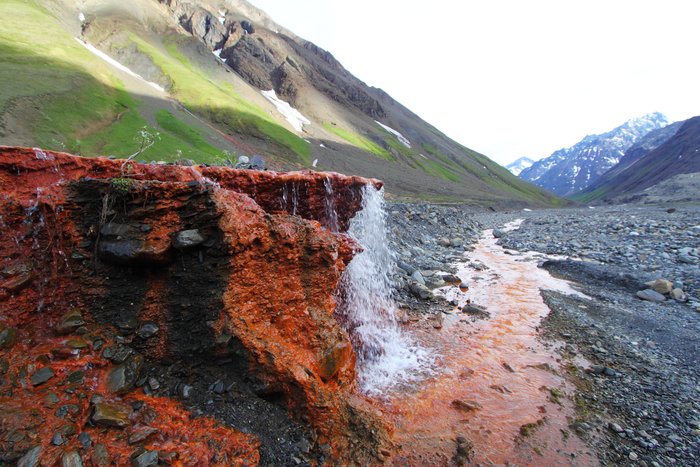
In addition to the direct negative effects of increased acidity and the increased release of toxic metals, an additional problem can also be created when the acid reacts with the rock that neutralizes it. As the water becomes less acidic, metals and other solids come out of solution. One of these precipitates, known as “yellow boy,” can smother life on the streambed. These streams turn a distinctive orange/red color, as their beds are coated by a solid veneer of chemical precipitate resembling brightly colored chocolate “hard sauce” or paint.
Economics
Acid mine drainage causes ecological harm to downstream areas. Some costs may be incurred by mining firms, in the form of tailings containment, water treatment, and reclamation costs. Historically, however, costs have been borne by the government when the mining companies responsible for the original mine go defunct. Modern mining companies are typically required (in the United States) to post a reclamation bond, which contains funds presumed to be adequate for perpetual waste treatment. However, evidence suggests that reclamation bonds are seldom or never adequate to cover the actual costs. Some expensive solutions to acid mine drainage, such as mixing sulfide tailings with cement, have been proposed as cost-effective, especially if the entire ecosystem and future-generation costs of acid mine drainage are accounted for.
Treatment of acid mine drainage has in many cases proved economically impossible. Downstream human and ecological harm has been unavoidable, and the costs are borne as lost ecosystem services. These losses include the costs of contaminated water, health problems associated with acid waters and heavy metal toxicity, loss of biological services from exterminated water organisms, and the loss of recreational and subsistence fishing and hunting opportunities.
A large number of acid mine drainage sites in the US are designated as EPA Superfund sites. These sites are examples of an “externality”, a cost that is not borne by either the mining company or the purchaser of the minerals (see our article on “True Cost”).
Prevention and mitigation
There are three basic ways to limit acid mine drainage; prevent sulfuric acid from forming, neutralize the acid after it forms, or collect runoff/seepage to contain the acid.
To stop the formation of sulfuric acid, the waste rock and tailings from a mine must be prevented from coming in contact with oxygen. Oxygen can come from either the flowing water or air. Strategies for keeping tailings separate from oxygen include submerging the tailings under still water, sealing them behind a synthetic barrier, or burying them underground.
Large mines typically isolate acid-generating rock underwater to reduce the rate at which oxygen interacts with the material. The formation of sulfuric acid is slowed but not totally prevented. Some waste facilities using this method are successful enough that active water treatment is not required. However, in many cases, the water flowing out from waste ponds still needs to be treated to neutralize acidity before it is released into the environment.
Often, however, acid prevention strategies fail. Isolating very large quantities of acid-generating waste and rock is difficult, either above or below ground, and in many cases is effectively impossible. Once acid has been generated and toxic metals dissolved into it, the water is expensive to treat.
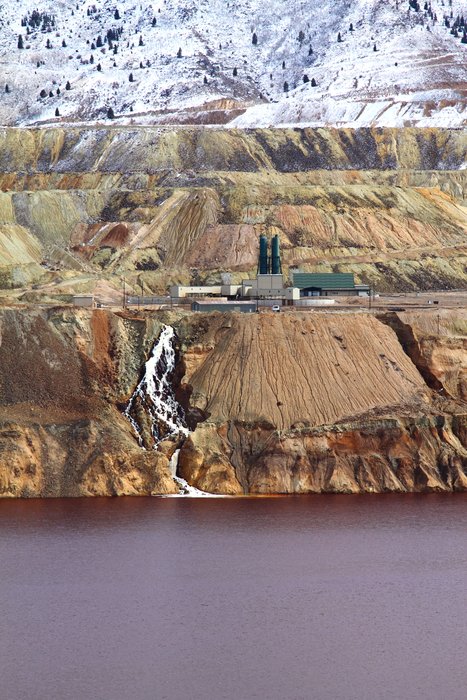
Active water treatment consists of using bases (alkali compounds) such as hydrated lime, sodium hydroxide, sodium carbonate or ammonia to reduce the acidity directly. Crushed limestone is one of the most common neutralization solutions in use today, primarily due to its low cost. However, the use of neutralization solutions causes a significant increase in the “total dissolved solids (TDS)” in the water, potentially resulting in negative impacts on both aquatic life and human health. Another major problem with active water treatment is that it often needs to continue forever. For example, the Berkeley Pit in Butte, Montana is a massive open pit mine that is slowly filling with very acidic water. Treatment of the water is ongoing in order to slow the rise of the lake because once the acidic water nears groundwater level, it would contaminate an aquifer used for drinking water. It will never be possible to stop active treatment at Butte.
One form of passive water treatment involves creating of artificial wetlands where natural microbial processes can be encouraged to precipitate out some of the metals released by the acid. However, this solution is impractical for large mines due to the massive area of wetlands that would be required.
Another potentially promising option is the use of “bioreactors” which utilize sulfate-reducing bacteria to precipitate out dissolved metals. While small-scale tests at locations such as the Leviathan Mine in California have been promising, like wetlands this technology is too expensive for use at large mines and would require too much land.
The goal of water treatment is to produce water flowing from the mining area that doesn’t present a risk to downstream ecosystems or human health. However, a large study in 2006 found that over 60% of large hardrock mines had failed to meet downstream water control standards using a variety of measures. Of note for future mine development, 90% of the mines that predicted “low” acid mine drainage potential had acid mine drainage problems at the time of the study.
In Alaska
Acid mine drainage is a problem at a number of active Alaskan metal mines including Red Dog, Greens Creek, and Kensington Mine. The potential impacts of acid mine drainage on Bristol Bay fisheries is the primary source of opposition to the proposed Pebble Mine in southwestern Alaska and also a concern at the proposed Donlin Gold Mine. One inactive mine in Alaska, the Salt Chuck Mine, is currently being considered for Superfund status by the EPA as a result of acid mine drainage.
Further Reading
- > "Acid Mine Drainage and Effects on Fish Health and Ecology: A Review" (2008) prepared for the U.S. Fish and Wildlife Service branch in Anchorage, AK.
- > Environmental studies of mineral deposits in Alaska. USGS (1996)
- > "Watershed Contamination from Hard Rock Mining" website from USGS
- > Wikipedia article on Acid Mine Drainage (with links to numerous specific examples)
Created: Jan. 19, 2018