Tracing the Heart of Alaska - A journey around Cook Inlet
Last modified: 12th August 2019
Start date: March 27, 2013
End date: July 12, 2013
Distance: around 800 miles
Mode of travel: walking and packrafting
Cook Inlet—the Heart of Alaska (March-July 2013)
(Completed in July 2013 - see blog posts, etc… in the sidebar on the right)
Why Cook Inlet? Cook Inlet is the heart of modern Alaska. On Google Earth, it’s a thin line tracing 800 miles of coastline, from Dogfish Bay to Cape Douglas. It has Native villages and Russian villages, hippie towns and tourist traps and Alaska’s biggest city. Cook Inlet is our home. It’s home to oil rigs and natural gas plants, coal mine proposals, wind turbines and tidal power proposals, endangered whales and abundant bears, salmon and melting glaciers. It’s home to most of Alaska’s population, and hundreds of miles of nearly unpeopled wilderness.
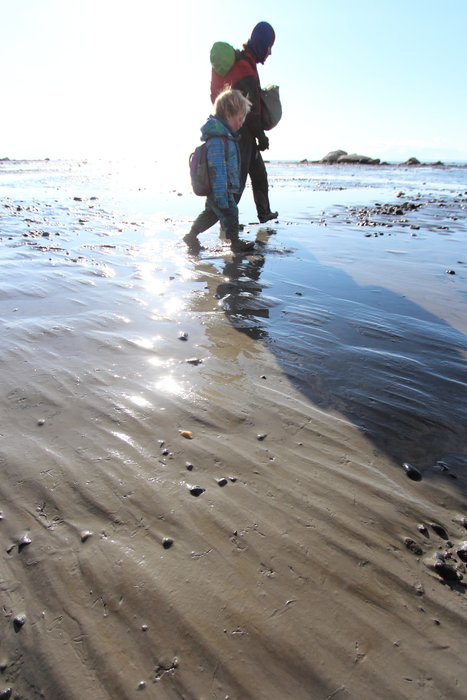
The future of Malaspina Glacier is clear. The future of Cook Inlet is muddier and more conflicted, and more important. It’s a place where all the diverse issues of Alaska’s future collide with the diversity of all its people. We walked and paddled through the blizzards of early April and the sweltering heat of early June, through snow and mud and cobblestone cliffs, floating rocketing tidal currents and fighting to launch in the surf, from the beaches just below the highway to the beaches visited only by bears… Along the way we met and stayed with people from Nanwalek to McNeil River, in villages and cities, and setnet camps and bear-viewing operations, asking all of them the same question.
Here in Alaska, and on Cook inlet, what does the future hold?
800 miles at Preschooler Speed
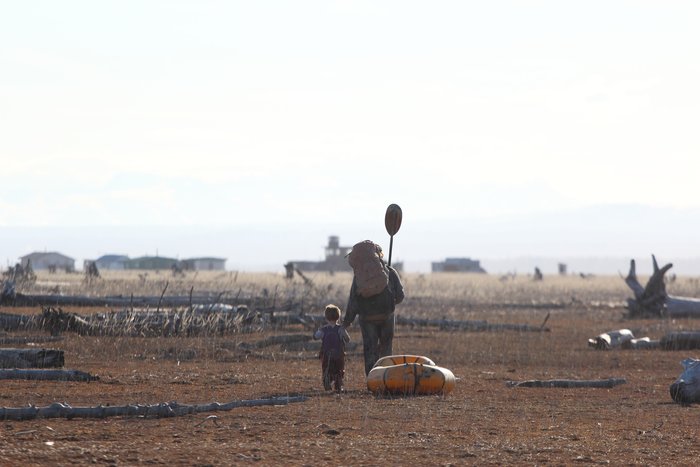
Back in 2001, when I was a new college graduate, I hiked 800 miles on my first big Alaska expedition, from the Drift River to Chignik. At the time, I was proud of that vast-seeming distance. Now, my four-year-old has done the same. Well, he’s probably walked a few hundred miles–with the remaining distance covered in our packrafts. He’ll tell you, proudly, that he once walked 8 miles in a day. My two-year-old walked and ran circles around us all at breaks, riding on my back the rest of the time. And neither of them have any sense of the scale.
What’s next?
Erin is writing a book about our Heart of Alaska adventure, and has written a children’s book to be illustrated by Valisa Higman, due out in early 2016. Bjorn Olson is in the process of creating a movie about the journey.
The family will be off on two trips in 2015, one from Nome to Kotzebue on skis and packrafts, and another circling the islands of Unalaska and Umnak in the Aleutian Islands.
Created: Jan. 19, 2018